Podcast: Play in new window | Download (Duration: 47:01 — 65.5MB)
Subscribe: RSS
Is titanium still the gold standard for implants?
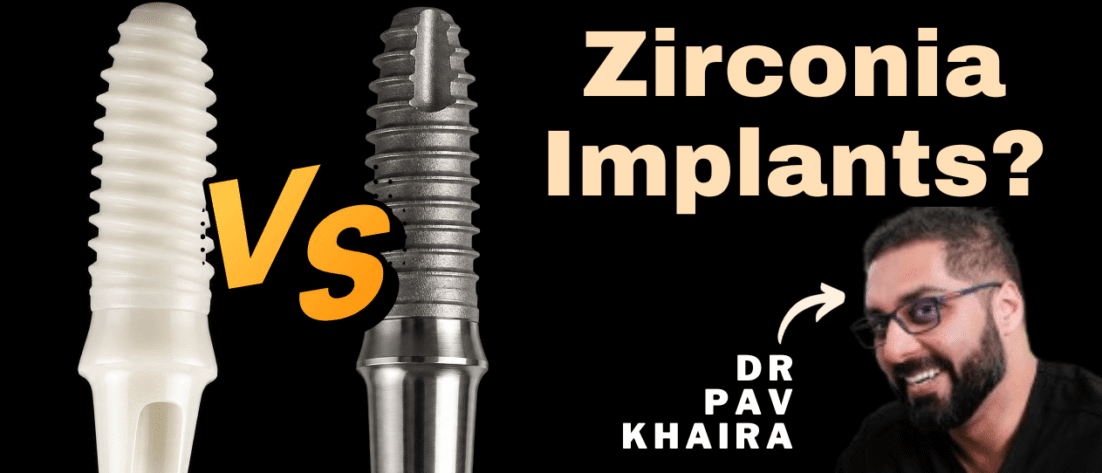
Are zirconia implants just hype from biological dentistry… or something more?
Do ceramic implants really integrate as well as titanium?
And should we already be offering patients a choice?
Zirconia implants are no longer a fringe concept—they’re entering mainstream conversations. In this episode, Dr. Pav Khaira returns to break down the science, clinical decision-making, and real-world application of zirconia vs titanium implants. From corrosion and osteoimmunology to occlusion and case selection, this is a practical, evidence-led discussion for clinicians navigating modern implant options.
Protrusive Dental Pearl: Thriving in Challenging Times
💡 Prioritize quality sleep—it sharpens decision-making, improves mood, and reduces irritability (6–7 solid hours beats longer, disrupted sleep).
➡️ Remember, stress comes from how we respond, not the situation itself—focus on what you can control and let go of the rest.
📢 Lean on your support system and make time for reflection and gratitude—they help reframe pressure and build resilience.
Key Takeaways
- Zirconia implants integrate just as well as titanium, with comparable clinical outcomes
- Early healing may be slightly faster around zirconia, but long-term results are similar
- Titanium can corrode over time, releasing particles linked to peri-implantitis
- Zirconia does not corrode, removing this biological risk factor
- Modern implant thinking focuses on osteoimmunology, not just osseointegration
- Zirconia implants are often one-piece → no microgap and improved crestal bone stability
- Surgical placement must be highly precise—zirconia is less forgiving than titanium
- Guided osteotomy is strongly recommended for ceramic implants
- Fracture risk in modern zirconia implants is low when manufactured correctly
- Hot isostatic pressing significantly increases zirconia strength and reduces defects
- Case selection is critical—limited bone or complex angulation may favour titanium
- Zirconia implants are typically cement-retained only
- Excess cement remains a risk factor for peri-implant disease → manage carefully
- Zinc phosphate cement is useful due to radiopacity and bacteriostatic properties
- Angled screw correction (titanium) is predictable only up to ~15 degrees
- Patient preference for metal-free dentistry is a growing driver of zirconia demand
Episode Highlights
- 00:00 Teaser
- 00:49 Introduction
- 02:32 Protrusive Dental Pearl: Advice for Dentists during challenging times
- 05:14 Basics: What Are Implants Made Of?
- 07:13 Osseointegration: Zirconia vs Titanium
- 08:28 Why Zirconia? Biological Rationale
- 11:13 Clinical Advantages of Zirconia Implant
- 14:09 Zirconia Implants Limitations in Clinical Use
- 17:45 Case Selection: When to Use Zirconia Implant
- 19:16 Fracture Risk: Myth vs Reality
- 21:30 Midroll
- 24:51 Fracture Risk: Myth vs Reality
- 25:29 Importance of Manufacturing Zirconia Implants
- 27:49 Weaknesses & Clinical Considerations of Zirconia Implants
- 30:49 Occlusal Programming for Implants
- 32:24 Screw vs Cement Retention in Implants
- 34:07 Angle Screw Correction (titanium Context)
- 36:20 Cement Choices for Zirconia Implants
- 38:27 Market Share & Future Trends of Zirconia Implants
- 40:25 Learning Resources for Zirconia Implants
- 41:51 Medico-Legal Considerations of Zirconia Implants
- 47:37 Training & Education Pathways for Zirconia Implants
- 48:25 Outro
Want to go deeper into implants?
Explore Dr. Pav Khaira’s Academy of Implant Excellence— training designed to help you truly understand the why behind implant dentistry, not just follow protocols. Hands-on options, mentorship, and advanced training available.
✨Follow Academy of Implant Excellence on Instagram: https://www.instagram.com/academyofimplantexcellence
Mentioned resources from this Episode
Want more?
📢 Check out more episodes on implant complications and treatment planning
- Implant Occlusion that Makes Sense – PDP 204
- Implant Assessment for GDPs: from Space Requirement to Ridge Preservation – PDP052
This episode is eligible for 0.75 CE credit via the quiz on Protrusive Guidance.
This episode meets GDC Outcomes C
AGD Subject Code: 690 Implants
Aim: To improve understanding of zirconia implants, including biological considerations, clinical indications, limitations, occlusal principles, consent, and material-related decision-making.
Dentists will be able to –
- Describe the clinical and biological considerations when comparing zirconia and titanium implants
- Identify key case selection factors and limitations for zirconia implant treatment
- Apply practical principles for occlusion, cementation, consent, and risk reduction in implant dentistry
Continuing Education Information
This activity may be eligible for continuing education credit through Protrusive Guidance. Participants must complete the associated quiz inside Protrusive Guidance to obtain a CPD/CE certificate.
Cost:
Access to this CE activity is included with an active Protrusive Guidance membership. Current membership pricing is available at www.protrusive.app.
Cancellation & Refund Policy:
Memberships may be cancelled at any time. Access to CE activities remains active until the end of the current billing cycle. Subscription charges are non-refundable once processed. Full details are available at www.protrusive.app.
Delivery: Self-instruction (online) · Location: Online
Contact: manager@protrusive.co.uk