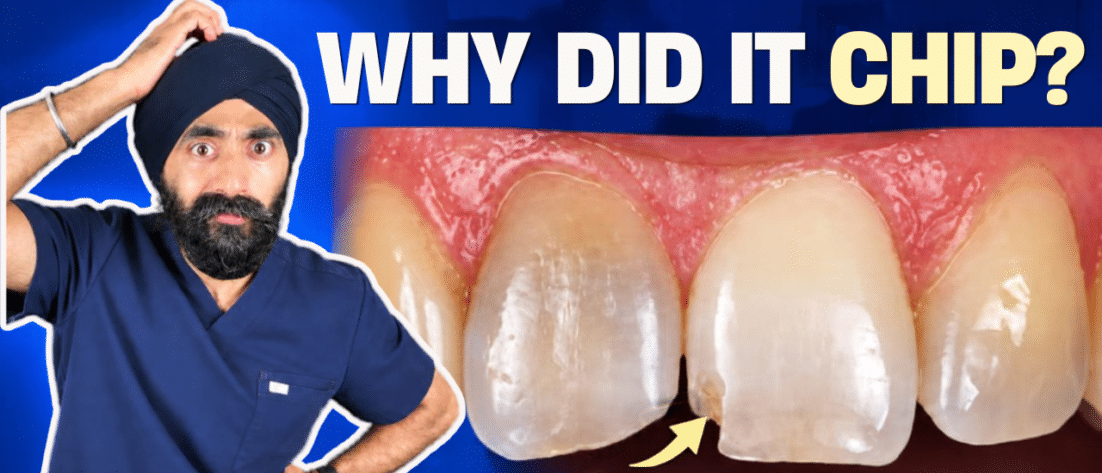
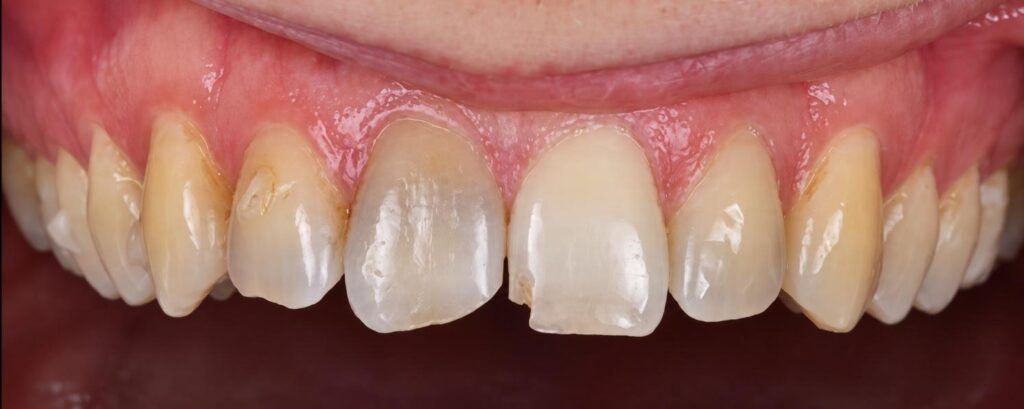
It’s Occlusion month! So of course our weekly article will be about force management. This week our focus is on anteriors.
You finish a composite, polish it, check the bite and send the patient home happy.
Then a corner chips off. Brilliant… 😅
Was it the composite itself? Should you have used something else, perhaps a composite with a higher filler amount?
Sometimes material choice matters. But before blaming the composite itself, look at the restoration SHAPE, the position and how they are being loaded.
Composite chips when the stresses exceed what the material and its support can tolerate. Design, available space, opposing contacts and patient habits can ALL contribute. The challenge is working out what matters in THIS mouth.
Before rebuilding the missing piece, ask: what needs to change?
Why Anterior Teeth and Restorations Fail Mechanically: The Five Possible Reasons
Jaz and Mahmoud frame it very simply on their Unchippable course. Mechanical failure of a tooth or restoration has just five causes, that’s it.
- Tooth-to-tooth overload (bruxism, breaching the envelope of function)
- Tooth-to-something-else (wear and weakening: toothbrush abrasion, acid erosion)
- The patient did something stupid (ice chewing, hair pins, beer bottles)
- The dentist did something stupid (inadequate thickness, unsupported enamel)
- Time (cyclic fatigue: thousands of everyday chewing and grinding cycles add up)
What actually broke?
First, establish whether the fracture is WITHIN the composite (cohesive fracture), at the bonded interface (adhesive failure), or in the tooth itself. Sometimes more than one is involved.
To the patient, it may all be “the filling you did broke”.
To you, these are different problems.
A fractured incisal corner should prompt a check of thickness, support and opposing contacts (occlusion).
A restoration that comes off largely intact deserves a review of the adhesive interface and placement conditions (isolation and bonding protocol).
Ask WHEN it happened, what the patient was doing and whether that area has failed before. Timing gives you clues; it does not always establish the cause on its own.
The ‘bite’ feels fine so why did it chip?
Because biting together (Maximum Intercuspal Position, MIP) is only a small part of the story!
A restoration may feel comfortable in MIP but interfere when the patient moves their jaw. This matters when adding length or changing the palatal contour of anterior teeth.
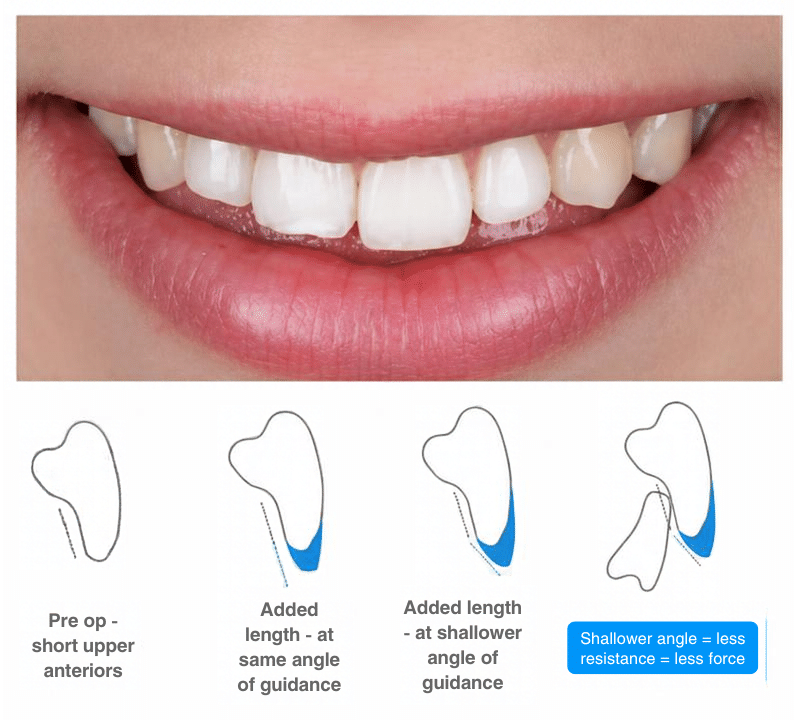
There may be room to place composite, but insufficient space for the opposing incisors to move comfortably during function. A tight overjet or deep overbite should make you investigate before committing to the proposed shape.
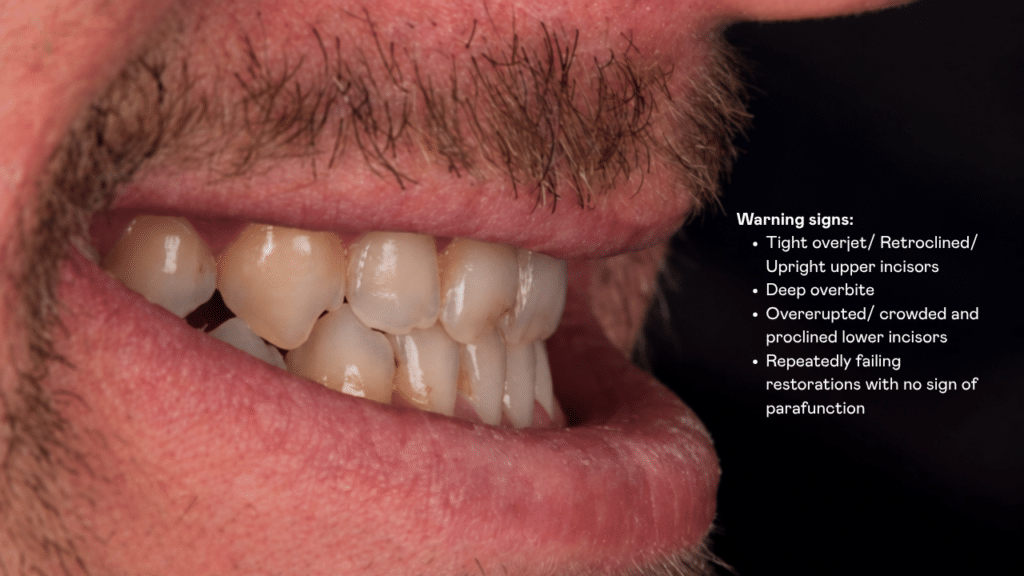
If the patient says their teeth catch or knock together, ask them to reproduce it.
Do not simply assume they will adapt to the new restoration.
CLINICAL PEARL: Check movement as well as the bite. Your restoration has to work beyond the position in which you placed the articulating paper.
Is grinding always the culprit?
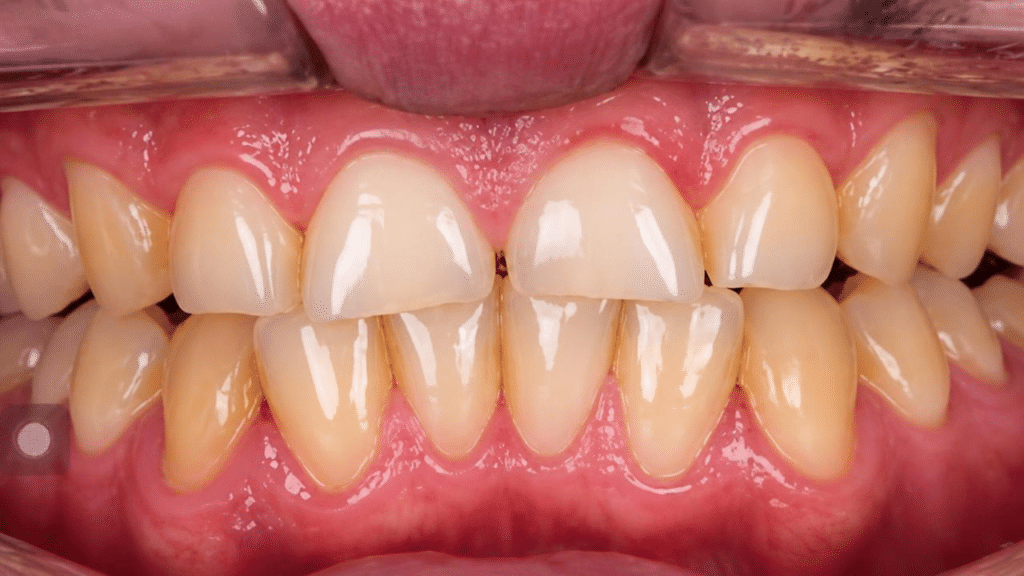
Grinding can contribute. It should not become the explanation we reach for every time something chips.
Repeated movements can load a restoration in ways that a quick chairside check misses. Previous fractures and wear patterns may show you where to look more closely.
Wear tells you a story, especially attrition (tooth to tooth) – when the wear facets match each other perfectly. The mantra should be “if they went there before, they will go there again”. Do not bank on the bruxism to stop or that they grew out of it – ensure the new restoration is IN HARMONY with their ‘envelope of parafunction’.
Has the patient had similar failures elsewhere? Is this restoration carrying contact that was previously shared? Has added tooth length changed its relationship with the opposing teeth?
An occlusal appliance may be part of an individual management plan, alongside appropriate restorative planning and follow-up. It cannot compensate for every design problem.
Beautiful composite vulnerable design?
Absolutely. Lovely shade matching and a glossy polish do not tell you whether the edge is adequately supported.
A thin extension in a loaded area (think of mamelons), a sharp opposing contact or an unnecessarily long incisal addition can create a vulnerable site. Adding length can also increase the leverage acting on the material.
That does not mean every anterior composite needs to look bulky! The shape you want must work within the patient’s mechanical circumstances.
Choose a composite suitable for the intended use and loading, following its instructions. Polishability alone should not decide what goes on the functional (edges and palatal for uppers, edges and facial for lowers) surfaces.
If there is inadequate space or support, revisit the plan. Thinning the composite until it fits may simply create another problem. Some cases need space creation (Ortho) or a different restorative approach (opening the Vertical Dimension of Occlusion – VDO).
Ask about everyday habits without blaming the patient

Patients may not connect a chip with nail-biting, chewing ice or using their teeth to hold or tear objects.
Ask neutrally. A chip does not prove they ignored your advice.
Make aftercare specific: explain which activities load the restored edges, using examples they recognise. Written instructions reinforce the conversation.
Check out our Ultimate Composite Bonding consent form for this! It leaves no stone unturned.
Discuss maintenance before treatment too. Composite may need polishing, repair or review. That is different from asking the patient to accept repeated early fractures as normal.
Repair or replace?
A localised chip does not automatically mean starting again. Repair may be appropriate when the remaining restoration and tooth are satisfactory and contributing factors can be addressed.
But repair should FOLLOW assessment.
Review the defect, tooth support, contacts, symptoms and history. Compare baseline photographs or records where available. If the same area keeps chipping, reconsider the design (does it need to be shallower? shorter? does the opposing need smoothing?) and plan before repeating the repair.
Allow time for the functional checks. Rebuilding and polishing can easily fill the appointment, leaving you rushing the part that might explain the failure.
For a deeper discussion, watch Unchippable with Jaz Gulati and Dr Mahmoud Ibrahim. You can also explore PDP150 — Occlusion on Class IV Composite Restorations and PDP160 — Fremitus and Occlusal Overload.
Next time a patient returns with a chip, pause before reaching for the composite, Protruserati. Work out what broke, how it was loaded and what you can change. Give your repair a better reason to last.
Give your repair a better reason to last.
Next week we will discuss posteriors!
For a blended learning hands-on course covering occlusion, composite, opening the bite, Dahl and force management, check out Unchippable – Resin Artistry x Occlusion (2 places left for January 2027).
Kate and Jaz
Continuing Education Information
This activity may be eligible for continuing education credit through Protrusive Guidance. Participants must complete the associated quiz inside Protrusive Guidance to obtain a CPD/CE certificate.
Cost:
Access to this CE activity is included with an active Protrusive Guidance membership. Current membership pricing is available at www.protrusive.app.
Cancellation & Refund Policy:
Memberships may be cancelled at any time. Access to CE activities remains active until the end of the current billing cycle. Subscription charges are non-refundable once processed. Full details are available at www.protrusive.app.
Delivery: Self-instruction (online) · Location: Online
Contact: manager@protrusive.co.uk