Is it a fit appointment — or a try-in? (The word you choose changes the whole visit.)
Water try-in or try-in paste — and what do you do when minimal-prep veneers just won’t stay put?
Why does the last veneer in the sequence so often refuse to seat?
And how much excess cement is still hiding after you’ve cleaned up?
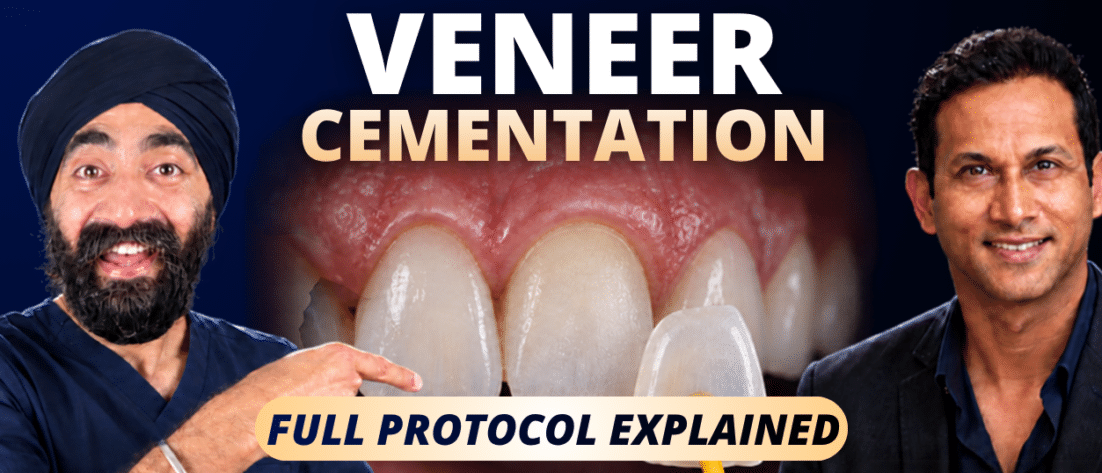
The bonding appointment is where a veneer case is won or lost on the day. In this episode, Dr Tejas Patel — a cosmetic dentist who runs a boutique, veneer-focused practice in Austin, Texas, with patients flying in from across the US — walks through his complete seat protocol: the checkpoints that should be closed before the patient arrives, the try-in, cement choice, the exact bonding and tacking order, clean-up and final checks. Then the troubleshooting: why veneers won’t seat, how to remove temporaries and old veneers without damaging teeth, and when it’s fine to go back to temps. One clinician’s tried-and-tested protocol — yours may differ, and that’s the point.
Protrusive Dental Pearl: Onlays Fail by Fracture — So Prevent It, and Repair It
The most common complication of a ceramic onlay or overlay isn’t debonding — it’s fracture. A systematic review of ceramic onlays found fracture was the leading cause of failure, followed by debonding and caries. Longevity was better where the preparation allowed at least 2 mm of occlusal ceramic, and risk rose further back in the mouth and with parafunction (though the wider literature on bruxism is mixed). So don’t skimp on occlusal reduction: the strength of the tooth comes from the gingival third, and sacrificing a little coronal structure to give the ceramic its ideal thickness is still far more conservative than a crown.
If a fracture does happen, and you can reach and isolate it, repair it rather than replace it. Bur-and-bond alone performs poorly: etch the exposed ceramic with hydrofluoric acid, then silane, then composite (the literature is mixed on adding a bonding agent first). Wary of HF in the mouth? A one-step etch-and-prime ceramic primer is the alternative. Then ask why it fractured — was the occlusal thickness there?
What You’ll Take From This Episode
- The checkpoints before the day — what has to be approved, scanned and verified before the patient ever sits down.
- Try-in, not fit — how framing the visit protects you and the patient when something isn’t right.
- The bonding sequence — the order, the tack, and the trick that means you never bust a contact open with a bur.
- Light-cure or dual-cure — which cement for porcelain, and what to judge any cement on.
- When a veneer won’t seat — the troubleshooting checklist, and when to go back to temps.
- Removing temps and old veneers — how to get them off without gouging a prep or fracturing a tooth.
Highlights of This Episode
00:00 TEASER
00:59 How to Bond Porcelain Veneers: The Seat Appointment
02:25 Ceramic Onlay Fracture: How to Prevent and Repair It
05:54 Why Veneer Cases Are Won or Lost on Communication
12:46 What to Check Before the Veneer Seat Appointment
17:59 Veneer Try-In vs Fit: How to Frame the Appointment
20:09 Veneer Try-In: Isolation, Tissue Control and Water Try-In
23:54 How to Choose Veneer Cement Shade With Your Patient
25:15 Veneer Bonding Step by Step: Etch, Bond, Tack and Floss
34:08 Cement Clean-Up, Radiographs and Final Checks After Veneers
39:30 Why a Veneer Won’t Seat: Contacts and Insertion Sequence
43:20 Light-Cure vs Dual-Cure Cement for Porcelain Veneers
45:21 When Veneer Cases Need the Vertical Opened or Ortho First
47:22 How to Remove Veneer Temporaries Without Damaging the Prep
49:44 Common Veneer Seat Mistakes (and When to Go Back to Temps)
53:28 How to Remove Old Veneers Safely
57:39 OUTRO
From the Guest
Dr Tejas Patel runs a boutique, cosmetic-only practice in Austin, Texas, where he has practised for over 20 years. He teaches veneers through two main courses: the Veneer Blueprint Course, covering veneers from A to Z — including his bonding protocol and prep sequence — and a course on no-prep and prepless veneers.
👉 veneertraining.com — the Veneer Blueprint Course and the No Prep & Prepless Veneers Course
👉 @veneertraining on Instagram — veneer tips
References & Further Reading
Sources and further reading from this episode:
- Abduo J, Sambrook RJ. Longevity of ceramic onlays: A systematic review. Journal of Esthetic and Restorative Dentistry, 2018;30(3):193–215. doi:10.1111/jerd.12384. Cited in the Pearl.
Want more?
If you enjoyed this episode, check out: How to Temporise Veneers Step by Step FULL GUIDE – PDP214
Going deeper on partial coverage? Onlays Shmonlays — the masterclass behind this episode’s Pearl — is on demand in Protrusive Guidance, in the masterclasses section. Access it throught the Ultimate Plan.
Tags
#PDPMainEpisodes #AdhesiveDentistry
Listen, Subscribe, Earn CPD
Listen: Subscribe to the Protrusive Dental Podcast on Spotify, Apple Podcasts, or YouTube.
This episode is eligible for 1 CE credit via the quiz on Protrusive Guidance.
This episode meets GDC Outcomes C.
AGD Subject Code: 780 Esthetics/Cosmetic Dentistry.
Aim & Learning Outcomes
Aim: To give dental practitioners a structured, start-to-finish approach to the porcelain veneer bonding appointment — from pre-appointment checkpoints and try-in through cementation, clean-up and troubleshooting.
Learning Outcomes — by the end of this episode, dentists will be able to:
- Describe the pre-appointment checkpoints — provisional approval, laboratory design review and model verification — that underpin a predictable veneer seat appointment.
- Apply a structured try-in and bonding sequence for porcelain laminate veneers, including tissue management, insertion order, tack-curing and removal of excess cement.
- Identify common causes of incomplete veneer seating and select an appropriate response, from contact adjustment to re-scanning or returning to provisionals.
Continuing Education Information
This activity may be eligible for continuing education credit through Protrusive Guidance. Participants must complete the associated quiz inside Protrusive Guidance to obtain a CPD/CE certificate.
Cost:
Access to this CE activity is included with an active Protrusive Guidance membership. Current membership pricing is available at www.protrusive.app.
Cancellation & Refund Policy:
Memberships may be cancelled at any time. Access to CE activities remains active until the end of the current billing cycle. Subscription charges are non-refundable once processed. Full details are available at www.protrusive.app.
Delivery: Self-instruction (online) · Location: Online
Contact: manager@protrusive.co.uk