fbpx

Clinical Case Discussions for Teeth Whitening ft Dr. Wyman Chan (MAGIC Part 2)

Ever had a whitening case that just… stopped improving?

Or a patient panicking about white patches mid-treatment?

And what about those single discoloured teeth — do you really need to drill an access cavity for internal bleaching?

In this second-part episode, we are joined once again by Dr. Wyman Chan – yes, the legend who hung up his drill to dedicate his career entirely to whitening. This time, we dive into real-life cases: everything from “wedding-ready” makeovers to stubborn MIH spots, and those frustrating single discoloured teeth.

Wyman reveals his secret sauce for whiter, healthier smiles, and why trays aren’t the only way forward.

We also get honest about patchy results and blotchy teeth mid-treatment – why they happen, how to talk patients through them.

Need to Read it? Check out the Full Episode Transcript below!

Key takeaways:

  • Alkaline gels encourage natural remineralization by using calcium and phosphate from saliva.
  • White patches during whitening are common and usually fade with continued use.
  • Clear communication and consent help prevent panic over blotchy results.
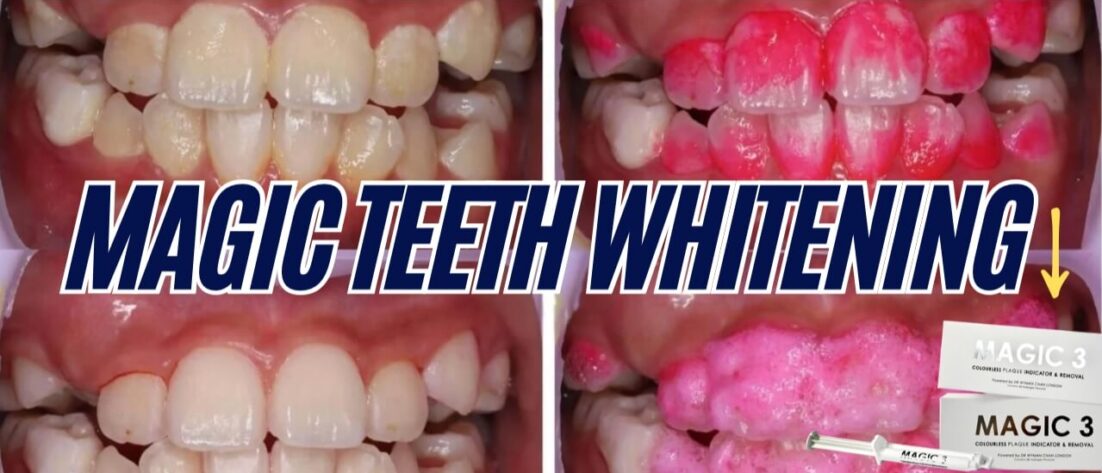
  • MAGIC 3 can speed up blending of white spots.
  • ICON resin infiltration doesn’t always work for deep lesions; sometimes minimal enamel removal and composite are better.
  • If shade changes plateau, try switching to a different whitening gel.
  • Photos with shade tabs are essential evidence and boost patient trust.
  • External whitening can treat single discoloured teeth, but it’s slower than internal bleaching.
  • Patient expectations are the biggest factor in whether a case feels like success or failure.

Highlights of this episode:

  • 00:00 Teaser
  • 00:27 Intro
  • 02:18 Introduction
  • 04:35 Pre-Restorative Whitening Case Study
  • 08:38 Trayless Protocol & Chemistry
  • 12:48 White Patches and Consent
  • 16:22 Midroll
  • 17:12 White Patches and Consent
  • 23:58 Understanding MIH and Caries White Spot Lesions
  • 29:55 Addressing Patient Concerns and Misconceptions
  • 30:30 Single Discoloured Teeth: External vs Internal
  • 38:12 Professional Development and Advice
  • 40:01 Outro

Discover Dr. Wyman Chan’s latest innovation — MAGIC 3.

If you’re interested in Magic 3, it’s just launched here in the UK!

Head over to 👉 protrusive.co.uk/magic3 for the latest offers and updates.

If you haven’t already – listen to Part One of this two-parter!

#PDPMainEpisodes #BreadandButterDentistry 

This episode is eligible for 0.75 CE credit via the quiz on Protrusive Guidance.

This episode meets GDC Outcomes: Outcome C and D 

AGD Subject Code: 780 – Esthetics/Cosmetic Dentistry

Aim: To explore practical approaches to teeth whitening, from handling caries and white spot lesions to using trayless, alkaline systems that promote natural remineralization. It also aims to give dentists clear strategies for patient communication, case selection, and choosing when to stick with simple, reliable techniques.

Dentists will be able to:

  1. Explain the role of pH and alkalinity in whitening systems and their effect on enamel remineralization.
  2. Compare tray-based and trayless whitening protocols, including patient compliance factors and clinical outcomes.
  3. Apply strategies for effective patient communication and consent, particularly around expected outcomes like patchiness and shade progression.

Click below for full episode transcript:

Teaser: Look at the result. Amazing result. I can show you more. This is not whitening. We're actually making white patches darker. See, to see that the dentists have done together, we do this, we've done two, took three hours, did not work, and that only took 15 minutes in someone's hand.

Teaser:
Now, the dentist, when they come across MIH, they don’t bother with resin infiltration anymore to go straight with the bur and get this missing. All these are external bleaching. No, no trays.

Jaz’s Introduction:
Welcome back to part two with Dr. Wyman Chan. This is like an advanced whitening webinar on steroids because these are all the questions that you asked in the community. This is the guy who limited his practice to whitening and advanced whitening techniques, like he literally had no handpieces in his clinic.

And he’s probably done the most whitening in the world, more than any other clinician. So we can really learn a lot from Dr. Wyman Chan. Not only did we ask your questions, but I also showed him my cases and asked him, hmm, what’d you think about this? I asked him to scrutinize the protocol I use.

And reflecting on what happens when whitening plateaus. Now let’s say you’re doing some whitening, it’s going well, but then no more changes are happening. Well, local Wyman Chan had a really good tip for you to try for your patients that seem to plateau.

One of the most fascinating things from this interview was about his take on non-vital bleaching. Traditionally, I would do an access cavity and whiten from inside, but he’s saying, no, we don’t need access cavity. We can successfully whiten externally for a root filled tooth. The other themes we covered are white patches during whitening and how unnerving they can be for patients, and how to actually manage that and what to expect.

We always talk about anterior caries. If someone has anterior caries, is it safe to whiten first or should you restore, then whiten, and then restore again? And are all gels the same made? In the same factory in China and shipped here, and then just branded differently. Is that how it actually works, or are the formulations actually different?

Lastly, we talk about trayless whitening systems, and I don’t mean strips, I actually mean paint on gel version and why there are actually some unique advantages of this way. Now, what Dr. Wyman Chan says that dentists, we don’t like trayless whitening systems, but there are a few advantages to consider. And so we reveal all in this episode for those who stay all the way to the end. You are in for an absolute treat. I know you’ve gained so much from this one, so I’ll catch you in the outro.

Main Episode:
Dr. Wyman Chan, welcome again. You actually right next to me. So, we wanna share our screens, well give us a wave, Niki. 

[Niki]
Hi, hi, hi. 

[Jaz]
Right. So, we had that wonderful podcast together talking about all these questions from the Protrusive Community. And now actually we get to share our screens. I’ll show you my cases. You show me some of your cases, and I’m gonna ask you for your advice on some of these cases that have gone well, that have got not gone well. So I’m excited for this visual piece. For those of you who haven’t heard that previous episode we did.

I tell you, it’s a Protrusive Wall of Fame. Okay? The energy, ’cause it’s very rare. I have my guest next to me. And this man, there’s nothing he does not know about teeth whitening. So guys, we’ve covered so much ground on that. Make sure you check it out. Including about some very novel technology in whitening magic three.

In terms of how it’s prophylaxis rather than whitening, actually ability to remove plaque without even touching it. So it’s something again, we’ll touch on at the end of this. I’m sure you’ve got some cases to show, but let’s just dive straight in. Okay, so this is an extreme case, obviously very poor or hygiene, caries, and I had to get ready.

And I did this with some composites. Tough work. Had to use everything, all the skillset. And then when he comes back some months later for review, like his oral hygiene has obviously improved. His gingival conditions obviously improved a lot, but I wish his oral hygiene was a little bit better.

But this was just a placeholder to remind me to talk about something. We see the extensive caries here. I would not feel confident whitening here before the restorative because I worry about the dentine involvement. I worry about the sensitivity, but sometimes you have those smaller Class three caries, multiple Class three caries lesions.

How do you feel about pre-restorative teeth whitening in those kind of scenarios? Whereby you know that the caries is not too deep. ‘Cause some people might say because the patient has active caries, we cannot get a cosmetic treatment. We have to stabilize the caries first, then whiten, then go back and do the shade management. What do you say? 

[Wyman]
It depends on the lesion, the extent of the lesions, if they are also all contained within enamel. Enamel carries the lesion. I want a drill. Firstly, I don’t have a drill, so I can’t drill. And that’s why I’m so lucky because I don’t have a drill. So I have to push myself, see what I can remove.

Okay, this is the case, that will show you. This is just into enamel. A very, very shallow caries, lesion here, interstitial as well. You can see some in the cervical margin on the lower left, four and five, and also the upper right as well. You can see that. You see we just doing repair. I won’t call this bleaching.

This is it. I like to use word dental, wellness, and aesthetic technique. So we can bleach all these dark color, which is a decay, at the same time. And then, we remineralize all those area that the area that already been demineralized by the bacteria, the patient, why they have this, because it’s- wow, a hundred percent is from poor all hygiene. 

[Jaz]
So yeah, this case is you’re showing us with caries, I can see the caries. Tell us more. 

[Wyman]
Okay. You can see even the palatally interstitial. You can see there’s caries lesion and palatal on the canine. You can see on the incisal edge as well and also buccally. You can see all those data, quite minor lesions here. Here I would advise, do the repair first. I call it dental wellness and aesthetic technology. Do the repair. We just use the bleach to bleach this discoloration away. And then using what our formulation is very special is high alkaline.

So it encourages the calcium and phosphate from saliva to go back to the teeth surfaces very fast. And that’s why we have all this remineralization, it’s self-healing. We have no calcium phosphate in our products. It’s all from saliva. So this is all from your own body. That’s why I believe in nature. It’s self-healing. Look at it, look at that result. Amazing result. I can show you more. Let me show you more. 

[Jaz]
Just to clarify though, so this is for those who are watching this now and they wanna do this, you are saying it is not just the whitening ’cause if we give a tray with, let’s say, 6% hydrogen peroxide or 16% carbamide peroxide, we give that. We are not gonna get the result that you’ve shown here? 

[Wyman]
Using the trays. This is a trays system. We call it a catch smile, which we’re gonna launch this, which we we’re going to, we’ll call it a relaunch. I’ve been using this for over 19 years now. We’re gonna launch this as the Dentistry Show by London.

So that if you are using a paint-on system with the retractor, we can paint all the way in, including the gums. You can even touch the gums. This area. You can see all those areas. They be remineralized and been bleached. If you use a tray, especially the design tray, which you score the model and you cannot get to this area about two, three millimeters of the teeth cervically. You cannot get to it. So that is a problem. That’s why, in this case, I would use a traysless system. So I think, so that I can get all the way to the areas that the trays is gonna get to. 

[Jaz]
I don’t know anyone else who’s doing trayless teeth whitening. Is this a new thing? I mean, you’re obviously doing it for a while, but would you agree that it’s not very mainstream, right?

[Wyman]
It’s not, not mainstream at all because I introduced this many, many years ago. The dentist just hated it because they’re so used to trays this. Just don’t like it. I know a lot of dentists actually told me that I don’t think my patients will do this without even ask their patients. 

[Jaz]
So what does that mean, like your patient, let’s say we know what teeth whitening with a tray. What’s involved, what protocols do you use? Describe the protocol of you sending someone home with a trayless whitening system. What does that look like? You know, we’re not used to it. To us it feels like, how’s that gonna work? So explain that. 

[Wyman]
Well just imagine, a retractor. Any retractor, let’s say probably a lot of dentists use the optic guard. Yeah. Just one of those. You can use one of those and just expose all the teeth that you’re going to treat. And just use the brush, the gel, get the gel into your dappen dish and just paint it on. So simple, just like. For the ladies, it’s so easy. Just like doing the fingernails. We don’t call it a gel. It’s a vanish. You need 2, 3 posture, 1, 2, 3 on each tooth. It’s so simple. Less is more. 

[Jaz]
Okay. And so, but you mentioned something. Okay, so if someone wanted to try this approach with a proprietary branded, 16% carbamide peroxide that you can get in a gel form, and they put the optragate in and they painted their teeth with the whitening gel, which they were usually used in a trait. Would they get the same result? 

[Wyman]
I have no idea. They could ask the manufacturer. Absolutely no idea, because I didn’t make the gel. The gel depth I’m using is made by me. The chemistry is for me. 

[Jaz]
So what it’s like carbamide peroxide or is it?

[Wyman]
No, it’s hydrogen peroxide. In this case I would use hydrogen peroxide. We have carbamide peroxide as well. We can use it, but in this case, I use hydrogen because it’s shorter. We retractor and is quite tight tire. I wanna get it done in 20 minutes. 15, 20 minutes. 

[Jaz]
You mentioned it’s remineralizing as well. So is remineralization a property of hydrogen peroxide?

[Wyman]
No, got nothing to do with her peroxide at all. 

[Jaz]
So how are we getting the remineralization here? 

[Wyman]
We just condition the teeth in the, for example, if you make the tooth in the alkaline condition, you will attract the calcium and phosphate from the saliva.

[Jaz]
Okay. Whereas most whitening systems are acidic, you’re trying to say, is that the formulation that you use is peroxide based, but it’s alkaline and therefore it creates the right environment for remineralization. Am I getting the science correct or? 

[Wyman]
I do not know whether other gels acidic, have no idea. Because I don’t make them. I just know that this, the gel that we use is alkaline. I think probably if you remember your preclinical days. I graduated from Guys. I think what is pretty deep in my memory is that, Stephan curve, remember Stephan curve? That the critical pH 5.5. The below pH 5.5, we have demineralization of the enamel. And then above 5.5 and get more alkaline.

You have remineralization. There is always a dynamic situation of demineralization and remineralization in the mouth anyway, so it depends on the condition of the mouth and the teeth. That’s why if you can get the teeth plaque free and no acid to attack enamel and then keep it pH seven, you get natural.

That’s why I like to use the phrase self-healing. This is why my own body, we don’t need anything else. My body got a lots of metabolites to repair all these really mildly lesions, they can be repaired. You can see that it can be repaired if you continue using that, all this area will get hard. Just look at that area. Amazing. I’ll show you some amazing cases as well. 

[Jaz]
But, okay. Just wanna follow along here. Right? So you’ve done four weeks of this treatment, but in a trailer system, that means 20 minutes a day, 40 minutes a day with your- 

[Wyman]
This is 20 minutes, twice a day.

[Jaz]
Okay. So it’s 40 minutes worth of treatment per day for four weeks. You said? 

[Wyman]
Four weeks. Yeah. 

[Jaz]
Four weeks. And this is a very nice white result. And it is [inaudible] that’s great. And it’s on the lower incisors as well, right? 

[Wyman]
Yes. 

[Jaz]
Okay. And the next step would be for anything that’s cavitated to restore the caries. But what if the dentist said to you, or what if the patient said to you, I don’t like these, how patchy my teeth have gone, but the white patches.

I don’t like them. They’re brown four, and thank you for improving the color, but I don’t like the white patch. How would you treat that? 

[Wyman]
That’s why it’s so important to have a consent form with the patient and this, I always advocate communication really important and gonna manage the patient expectation properly.

As a dentist, it doesn’t matter what we do. I think really important to manage the patient expectation. If we can manage the patient expectation properly, your success rate is already 80%. If you could not manage your patient expectation, it’s going to be a failure on any case, anything we do. So in a consent form, we would’ve written down that yes, we’re going to make this brown, this dark area whiter, and they can see they’re already pointed to the patient can see all those demineralized area.

By the time we do it, it’s gonna get more prominent. I say not to worry. It’s self-healing. What we’re doing with this condition, the teeth so that we’re going to bring back your calcium and phosphate to remineralize this area. And these are white patches will disappear within three to six months. Self-healing, we don’t have to do anything, just wait three to six months. 

[Jaz]
Okay, perfect. And then that’s very encouraging, but it’s reminding me in this scenario where a lot of dentists on our community, they might have started whitening and then you get an email saying, I’ve started whitening.

I’m two days into it and I’m really scared. ‘Cause my teeth have gone blotchy and white everywhere. Now I have heard that when that happens, it means that there was communication issue. We should have worn- 

[Wyman]
Enamel damage. Yes. 

[Jaz]
Enamel they have is porous and damage. And we need the correct advice there is, don’t worry. Carry on bleaching, keep going. Doing the full course. It will correct at the end of the whitening treatment. Would you agree with that? 

[Wyman]
I agree. And also we also have products actually can make these white patches disappear even very fast. So what they do, we don’t just use one product, we use a combination of many, many products.

So it depends on the patient’s expectation and also the patient’s requirement. In fact, the patient look quite nice. The teeth are nice and even yes, if they explain to the patient that will be the white patches, but we can reduce that white patches with some other products within two weeks.

Well, like for example, we can use the Magic 3. Depend on that because firstly, why do we have white patches here? So we need to understand why these white patches, in fact, the white patches, they become opaque enamel. These enamel are damaged. The loss of minerals. Mainly calcium and phosphates.

And that’s why the change of reflective index make it opaque and give it a different tone of the structure of the teeth structure surrounding those non damage. You look at non damage, but if you dry them out, because when we’re doing whitening, you dry them at the same time as well.

So when the teeth are dry, all these white patches become more permanent. So what we can do, we can use a Magic 3 because this is using stronger. This is done in China using 10% hydrogen peroxide, so there’s a bleaching effect as well. So I learned a lot, and that’s why we brought the Magic 3 in.

So we probably one session, 20 minutes with the 10%, here, we use 6% and one session with the 3%. And then we don’t want bleach the color that much. And that will help to remineralize to bring the calcium and phosphate back. And when that white patches become the same color of the tooth.

That means we have successfully remineralized enamel. That means that we become translucent. We have want to make these white patches more become the normal translucent enamel. 

Interjection:
Hey guys, it’s Jaz interfering here about Magic 3. Dr. Wyman Chan has given us guys a Protrusive Community, a special discount.

Colorless plaque indicator that can really help with white spots and really excellent for those patients who are nervous about having a scale and they don’t like the tools ultrasonics a way to really clean and polish their teeth without actually doing much scrubbing and making that calculus a bit softer and easier to tackle.

I told my hygienist that she was absolutely in love with the idea. ‘Cause we have a lot of patients who just prefer hand scaling or minimum intervention as possible. And I don’t really like the tools that are used in hygiene. So this minimally invasive way really sounds cool. So if you’re interested, head over to protrusive.co.uk/magic3.

That’s protrusive.co.uk/magic3. And we’ll keep updating it as when Dr. Wyman Chan gives the Protruserati a special discount. Let’s do join the episode. 

[Jaz]
Have you got an example of that showing how you made a opaque – 

[Wyman]
Yeah. I’ve got a really, really good case. Lemme show it to you. 

[Jaz]
Yeah, please. So while you are finding that case, I’m just thinking out loud, right. Classically, in the UK nowadays, and many of other parts of the world, when we do the whitening and we see the white patch nowadays, we’re getting better at consenting the patients that at the end of treatment we will do icon resin infiltration.

So I’ll show you a case, so we’ll talk about that. But let’s go over yours now. Please tell us about this case. 

[Wyman]
Okay, this case, 16, a young lady, at the age of 18 years old, and had started orthodontic treatment. You can see, that’s why we will show you the lesion were not there before the orthodontic treatment.

The teeth were nicely lying but on a fixed treatment, bracket because a patient, all these are due to poor oral hygiene. If a patient have very good oral hygiene, this won’t happen. But unfortunately, lots of our patients do not have good oral hygiene. That’s why this happen.

And okay, and then you can see all those are around the brackets. The reason why you don’t around the brackets, because this area are very difficult to clean, like look at the bottom teeth are very difficult to clean, which is between the gums and the brackets. So they are more damaged, remineralized, and become opaque now.

What we’re going to do, we’re gonna make this well opaque area. The white patches disappear. Just look only, just 10 days. Look at that. This is not whitening. We’re actually making white patches darker. You see that? Nothing like this happened before actually making the white patches darker which is amazing. 

[Jaz]
But hey, this is pretty spectacular in the sense that the opaque white areas, they have demineralized, right? 

[Wyman]
Yeah. And that’s why we’ll bring it back to his original condition, which is translucent enamel. If we go back to our student days are clinical days, they’re translucent.

So all this enamel, translucent, we see the underlying color of the dentine. That’s why we did the same. We just make this damaged enamel and repair them into the normal, the status, which is translucent. That’s why this disappear become, we just see underlying color. 

[Jaz]
Do you think this result could be possible with something like tooth mousse?

[Wyman]
I dunno, I don’t make tooth mousse. You can try. I have no idea. No idea at all. 

[Jaz]
I don’t have any experience with that. I mean, I’ve seen brochures of some smaller, but nothing this expensive. So if anyone in the community has used that, let us know. So fine. But then a lot of dentists might be saying, I will do some icon resin infiltration.

But if you can do something without putting resin, then that makes a lot more sense to me. What you’ve done is remineralize and not relying on a change refractive index to the use of resin is more minimal. 

[Wyman]
Exactly the same scientific principle. It’s just changing the refractive index of the enamel. You can do it by self-healing, bring back the calcium and phosphate into the enamel, which is self-healing and non-invasive. Or you can do a minimal invasive case, the technique using rest infiltration. It works really well. I’m sure both will work as good, but I think the only thing I’d like to bring it to you- 

[Jaz]
But G2S, can you explain what G2S is though. So this is not the Magic 3. 

[Wyman]
No, this is a 10%, which is paint on for Those area only for 15 minutes. Very simple. 

[Jaz]
But the UK version if you like, coming? 

[Wyman]
Yeah. All the products works. All my products work on this because at that time, in those 2019, China only have the 10%. Now they have Magic 3. They have two other products as well to do your work. 

[Jaz]
Okay, perfect. And you don’t need any fluoride shrinking like that. You just use the patient’s alignment. 

[Wyman]
We don’t need to a fluoride, because we’re already using our fluoride toothpaste daily. I think there’s enough for in the toothpaste. I don’t think we need anymore. I think just making enamel back to his original grace, I would say. Just make it into normal enamel, which is translucent. This enamel is not normal. It’s damaged. That’s like, oh, picking color. It’s demineralized. 

[Jaz]
Now, I’m just thinking out. Now that patient presented to me, right? And they’re like, look, I’ve just had braces and this is my situation. I would be thinking, well, the color of your teeth as per the shade type is A3, right? Why don’t we, let’s do some whitening. Get everything lifted up and then hopefully the white patches will blend in and also post ortho, maybe some natural remineralization and then maybe icon resin infiltration at the end, if any come. What do you think about that approach of whitening? 

[Wyman]
It all depends on the complaint. The main complaint, so the patient, the main complaint of the patient here is patchiness. She just want uneven teeth and now the patient actually after this she say, now I want my teeth go whiter. I haven’t got a, this is not done by me and by a PhD in orthodontist, Dr. O Yang.

And I know that the patients are actually gone for teeth whitening. The teeth must be very white now. So initially we just sort out the main complaint, which is patchiness. I always believe that when you make the teeth, you make it straight. And you make it beautiful even. And then the next thing they want is white. White straight teeth. I think everybody want white straight teeth. 

[Jaz]
That’s two things. They want straight teeth and white teeth. Yes. But do you think if someone does a teeth whitening from here that could have, we dunno what it would look like straight after. I see the logic here. I get it. But with a complaint, but interesting.

Look at that upper left canine. It’s got a white patch on the facial. Right? The white little spot. That was something there that was even there in the pre-treatment before ortho. The 2016 photo. If you wanted to treat that, what would be your, that was the chief complaint. How would you manage that? 

[Wyman]
In decade? I would just paint that area with Magic 3. Just that area. Nothing else. It’s 15 minutes. Once or twice a day. That’s it. 

[Jaz]
See I’ve gone quiet, because that is, like for me, I’m thinking, okay, teeth whitening icon resin infiltration, for something that’s been there for so, so long. Because what if that white patch is very dense and deep in the enamel? Would Magic 3 still work for that? 

[Wyman]
It would not work. Magic 3 will not work on, there are two. Let me go a bit deeper into white spot lesion. There are two we would classify into two type of white spot lesion. One is, we call it caries lesion. One is non-caries lesion.

Now let’s talk about a non-caries lesion. Typically, we see it in fluorosis. It’s not, it is. And we know that the fluorosis is, are very difficult to go decay because it’s got a lot of fluoride on the teeth. And the second type is called a MIH, Molar Incisor Hypo mineralization. So these are non-caries lesion and they are born when, and they form when the teeth are forming.

So they came out from the mouth, from the bone, from the gums. They’re already there and the other type is caries white spot lesion, which is this, if you don’t treat them, they will progress into caries. This is small demineralization, so there are two different types. 

[Jaz]
But this one is non-caries?

[Wyman]
That is non-caries. That’s why deeper, treatment bit longer. It will go away. 

[Jaz]
But it will go away. That’s interesting. 

[Wyman]
It’ll go away. It’s not that deep. I can tell from a color’s not that deep. 

[Jaz]
Oh. Perfect. So here’s a case I treated with micro abrasion followed by a home teeth whitening system, followed by a little bit more micro abrasion in some areas, and then some more whitening.

And this is the result we got, I think about eight weeks, obviously he was over. I won a prize for this as well, this case, because way he was managed. But you know, there’s still some small brown areas. How does one achieve perfect? 

[Wyman]
Change the bleach. 

[Jaz]
Change the bleach. So that brand of bleach has done standard? 

[Wyman]
Has done the maximum already. Yeah. Just change on the bleach. Change the one that works. I’m sure there’s at least one in the market that works. 

[Jaz]
It’s interesting. Yeah, because it is a bit like when patients say to us, I’ve tried, I’m getting sensitive teeth, I’ve tried this. Okay, change the toothpaste, for example. Change a brand. The toothpaste. It’s a bit like that. This infiltration case. I’ll show you of icon resin infiltration, but sometimes, we wanna know, is there something else we could have done to get a good result without having to use resin.

Do you note of any ways that we can treat patients like these that I treated with resin infiltration in an even more minimal way?

[Wyman]
Yeah, I can show you a case. Let me find it. I’ve got a very, very good case. This is a typical MIH. I can see the color is so opaque. I can see this is very, very deep. That was in 2014. I did this. I told the patient that what color do you want to go? Can see the color we get to here, apparent patients who wanna go to OM3 from a B3.

So I prescribed a treatment that we may have to do some, I would say targeted micro abrasion just here. But I say we have this resin infiltration. I can try it on you. So I did try, it fell it didn’t work that well because it’s so deep. So at the end. I didn’t drill. I didn’t remove and then, and micro, I can see that someone’s enamel is gone as well. So that is, so that is quite minimal invasive still. 

[Jaz]
So, the micro abrasion was done here? 

[Wyman]
Yeah. I didn’t do. In fact, I convert icon infiltration is micro abrasion. You acid to remove those black area and that’s what this is. And then until you remove all those white area, you cannot see any white area.

That means it’s all been removed. That’s why you have to put resin in there to fill it up. So I tried that well, 11 years ago, because it’s so deep, I know it did not work. When I look at that, it’s so opaque and so shiny. It’s very deep. So what I’ve done, I just leave it, I just do a little bit, use a 0.5 as the dentist use a 0.5 micron, 0.5 bur of a round bur 0.5mm.

Yeah, yeah. 0.5. And just remove a bit of that. And then I put a bonding and then I give them the dentist, the bonding, to say, how do you get such a good color? So we use A1. And then we use Excel. We mix ’em together. When we get the right color, then bond it. 

[Jaz]
You mix A1 and what?

[Wyman]
Excel. Extra light. Until we get the under the dentist, get the right color, then they bond it and polish it. Look how beautiful. I’ve done, the dentists have done together, we do this, we’ve done two. It took three hours, did not work. And that only took 15 minutes in someone’s hand.

So, even in the future when you see cases like that, don’t bother, just remove a little bit of enamel and just you. Bonding take less than half an hour. 

[Jaz]
So is mega abrasion. 

[Wyman]
It’s like mega abrasion. So yeah. 

[Jaz]
Remove the most superficial part of this white patch. 

[Wyman]
Yeah. 

[Jaz]
We mask it.

[Wyman]
Yeah. We bleach first. Bleach to OM3, to the color. The patient one. Then we mask it. 

[Jaz]
This is what it is, and so this is masking composite now. It is good point. You raised that when you use the icon etch every cycle remove- 

[Wyman]
Remove enamel. But can you see that? 

[Jaz]
So a shortcut version instead of using-

[Wyman]
Exactly. You’re doing exactly the same thing. Because I wanna look at that, that the dentist now will work together. Show me this. I say, my goodness, why we wasted three hours, we could use a burn. Get it straight away in 15, five minutes. Can you see the point?

[Jaz]
I see the point. And I think it’s good to raise the point. ‘Cause some people like, do I need to buy something else? Do I need to, is this the only way? And to remember that our traditional ways, as long as we are careful, minimal magnification, then these ways are possible. 

[Wyman]
Now, this is another way. That’s why I find it very useful. And the dentists love it. Now, the dentist, when they come across MIH, they don’t bother with resin infiltration anymore. To go straight with a bur and get this so fast. Half an hour, just half an hour. That’s what it takes so fast. 

[Jaz]
Okay. So see this lovely lady. When she talks, she mostly shows her lower teeth. You hardly see her upper teeth and she complaining of yellow teeth. And so her starting shade is A4. And we get to here, that’s the same, A4 shade. So we went a bit lighter and eventually we get to around about here. So this is maybe an A2, A1.

And she had zero sensitivity throughout. Okay. And she did whitening and whitening, whitening and kind of stabilized here. Is this the same answer as before? Just changed the whitening brand and, and do some more? 

[Wyman]
Yeah, just change the brand and do some more because whatever you are using is saturated already, will not work anymore. 

[Jaz]
So I’ll show you a next case now, which is a interesting one where I think the patient told me a lie. I think the patient scammed me. And so this part of the video is not gonna be on YouTube, it’s not gonna be on public forum. For obvious reasons, this is gonna be in our private community. So Angel, make sure that we remove, we pause here, and then with the outro, or we just chat with more to Dr. Chan.

But this is for the community. This lady comes in and her complaints are obvious that I don’t like the brown. I don’t like the white. I want ’em all to be the same color, which is a very reasonable concern. We do some shade analysis. Now, obviously these parts are A2, but the rest are very brown and we do four weeks of teeth whitening and everything is going well so far for four weeks.

I’m happy as a dentist, so maybe you may not be happy at four weeks, but I’m happy as dentist for four weeks. Sorry. I’m like, okay. Wow, this is great. You’re doing really well. But the red flag for me, Dr. Chan, was she said to me, I don’t see any difference at all. She said this looked exactly the same as a pre-op and this was a red flag to me.

‘Cause like, hang on, you have to at least admit that there was a difference. Like yes, it’s improved a bit. We’re not there. I’m not saying you’re there yet. So this really upset me. I was like, hang on, are you not seeing what I’m seeing? I showed the photos and she said, no, I don’t see any difference.

So listen, don’t worry. Here’s gel. Take it six weeks more, reduce some whitening. I promise you that has been different. I don’t know why you can’t see it, but when we get that, we can get you looking good. And we may do some icon resin infiltration at the end. She comes back and she’s done six weeks of whitening, apparently every day.

Okay? And she said, I want my money back because, I’m not seeing any improvement. Now, from here to here, I agree with her. I don’t see much improvement, but here’s where I don’t think she has been doing the whitening every single day, six week. What do you think? 

[Wyman]
I think it it happens many times. It happens to me as well, happened to a lot of my students in China, and that’s why I’m very pleased to see that you have taken a pre-op picture with the shade tag that is very important.

So if you do teeth whitening, this will happen. If you are worried, it works really well. It’s beautiful, four weeks already beautiful. You can see the brown area already gone. For patient, well, I don’t know whether it’s genuine or not. I have no idea. But another thing that if the patient are doing the home bleaching every day, they may not be able to see the difference because it’s just like if you haven’t seen a friend, a lady over a year, the hair has gone, haven’t been cut.

So it say, oh yeah, hair is gone. Probably your friend say didn’t notice that because it’s been a year. All these are, the teeth are whitened slowly, slowly. But that’s why if you have before. I will always put A2 back here again. And then can see the contrast. Because here there’s no A, so always put a A2.

That’s why I started this. Put a straight tag next to the canine again, because she really can see the difference. You put a straight tag here, there’s no way she cannot see a difference. There’s particular tag in here. I don’t wanna worry about her. She can take you to court or whatever. At least you got that.

This photo is so important. It’s evidence that you have whitened the teeth. If you have no photos, I don’t think, don’t argue. Just refund the money. If you have photos, don’t refund the money because you are evident to show that the teeth has been malted. From here to here, she may not have done anything and she may have but color improve slide.

I can see the brown lifted there. Lifted there because the teeth are booted and quite white. Probably the bleach we are using, probably just saturated, just did not go any whiter, but that the brown areas did go whiter. All these areas I can see. Do did go whiter. 

[Jaz]
And if this was at your desk and she was, okay, I want these yellow gone now, what’s the next step?

[Wyman]
Change of bleach. 

[Jaz]
Love it. Any brands that you recommend? Tell us about your- 

[Wyman]
No, I don’t, I cannot. I recommend you just have to try and an error. 

[Jaz]
Okay, fine. So this is obviously covered. One of the podcasts that we did, we just went into internal bleaching protocols and there are many, so I’m very excited to hear yours. But this one was, a root filled tooth. So I went inside access cavity, reopened, and I did place some gel inside, seal the gel, come back refreshing it one time, and then we get this result. And, I’m very happy with the result.

But interestingly, you said that we don’t need to open up the access cavity anymore, so please share your screen. And how on earth is that possible? 

[Wyman]
I suggest that was a very beautiful case, really nicely done. You should get a price for that. So, this patient came to me, in fact, quite long time, 15 years ago, live 18 year, 18 years old. A young lady, girl, and presented with a single discoloured tooth, a very, very nice story.

And she told me answer. What happened? And then she told me very, very detail what happened. Remember, I know in the school days, we have all the children play a game. Say what time? Eight it is. And then during that time, she bumped into the wall a rush bump in the wall.

Remember that when she was eight years old. But that did not – the tooth did not change color until two years earlier when she was 16. So we slowly, slowly diffuse order my dentine to the order with the dentine and then enamel, which is visible. So it’s quite interesting that as the dentist sent to the dentist, did some pop tests and say, yes, still got some response and you still can see the canal there.

So I know that traditionally that a lot of people would’ve done the root canal and internal bleaching because probably they say there’s no other way in the old days. But this patient is very greedy. She wants the rest of the teeth whiten as well. So that’s why I’ve been a dentist. I offer her all the options that we have.

I say we can do veneers or all of them. We can do prosthodont crowns. I say, if you not me, when it’s referred to amazing dentist can do wonderful work. If you just want a single tooth, change the color of that single tooth, the upper right one. Then, we can do internal bleaching, which is the traditional way.

And then just show [inaudible] We have to open the hole and then we to refill, we have to do a root filling and then do bleaching, blah, blah, blah, blah, blah. And then the patient said, no, she doesn’t want all that. She came to me because she saw a lots of review and I can do magical work on teeth and then okay, and said, we can do it long invasively.

So I prescribed her treatment and she asked her, she came to, because when you come to me, it’s not how much to go. How much do you want to go? So as a patient, patient say she like to go to OM3. So here we go. 

[Jaz]
Do you charge more? But the more white they charge? 

[Wyman]
Yes. Yes. They decide we don’t have a price. They come in, they choose the color, then we give them a price, and then we guarantee that they will get that color. So we get that. And this is done in February, and this is only three weeks later. Look at that. Look at, I’m lucky I have a spectro photometer. So we can see the color from B4 to OM3 three.

All this seats gone to OM3 and the central has gone to OM2 as well. One of this has sent, gone to OM2. Yeah, so amazing. All these are external bleaching. No, no trayss. The get to smile ah, system. I look at that. How beautiful.

[Jaz]
Considering that was calcific metamorphosis, that yellow discoloration, can this be, I know you’re demoing this show, but can you think this kind of result can also be achieved with a trade based system without obviously capacity and that kind of stuff? 

[Wyman]
Yes. 

[Jaz]
This is a long time, right? 

[Wyman]
Yes, of course it can. It can. trays works same as well, but we do trayss. There’s a lot of patients, doesn’t want to use a paint on the system. One thing especially ladies they always talk about the wrinkles that make them into the round the mouth that they have, because I tell them that the wrinkle is only temporary. They always go back. Some ladies do not like that. 

[Jaz]
So from the retractor? 

[Wyman]
Retractor. Yes. 

[Jaz]
Okay. 

[Wyman]
Yeah, so we prescribed trays to these people. 

[Jaz]
And I think you said relevant to Ian’s question from the community was you just white them at the same time. You don’t like give extra no head start that you discoloured tooth.

[Wyman]
I know there’s a many school of thoughts here. There are many articles and many teachers, I’ve been to the lectures as well, they like to white in the top jaw first. In this case, probably just like to whiten just that tooth to make sure that it works properly so the patient can see the difference because I have so much experience.

If you’re not experienced, maybe you can whiten us the top teeth first. A lot of people don’t do that so that they can see the contrast, because if you take good photographs, you can do everything together. Photograph is so important. Please take photographs. If you only photograph, you end up with a case like Jaz, come back and complain, and you’ve be in trouble.

You have to refund the money. So if you take photograph, the photograph is evidence to show that. The teeth have gone whiter. There’s nothing the patient can say. So are writing them at the same time. The darker teeth will whiten faster. The whiter teeth will whiten slower. At the end, they will catch up, not to worry, they will catch up.

[Jaz]
Okay. And then black tooth, I showed you the one I did. Could you achieve the result that I did? 

[Wyman]
Yes. 

[Jaz]
Without having to do an access cavity (even though it’s spoken differently). 

[Wyman]
Yes, yes. I have many cases. Maybe later I will bring it up. I’ll bring out, I’ll show you later. 

[Jaz]
That’s really fascinating because the fact that you’ve completely changed my view on internal bleaching. And I think that, what’s the harm in trying to get some whitening effect providing, of course the usual rules that the root canal is well done, the pathology has been taken care of. Why not do the non micro bleaching in that way? Would it be a bit slow, you think?

[Wyman]
Nope. This is stand in three weeks. 

[Jaz]
Really? No, go this way. When I’ve done internal beaching within two days, it from black to white because of how quick it does, would it be that quick if you did external? 

[Wyman]
No, no, no. Because internal bleaching, you’re bleaching the dentine. 

[Jaz]
Yes. 

[Wyman]
You’re bleaching the source of the stain. So with external bleaching, you gotta go through the whole layer of enamel. Then get to the dentine. It’s slower internal bleaching. I used to do a lot. You should do a lot when I was younger and it’s not easy. It’s very technique sensitive and probably you heard other people talk about it, you’re gonna make sure the GP is sealed properly and lots of complication as well, so I’m so glad that I don’t have to drill anymore. I don’t have to go through all these complications and it’s so easy just to use external bleaching. It works well with your tooth as well. 

[Jaz]
Okay, perfect. I’m looking forward to trying that. Niki, did you have another question that you found that we haven’t discuss?

[Niki]
I’ll just, was one, look, some of the questions here, there’s a very specific one here from Dr. Richard Coates, is it there? You know, that cringe feeling you get with certain things. For me, it’s wooden lolly sticks, especially touching my teeth, but touching my mouth at all really makes me squirmy.

When I whiten my teeth, this gets heightened. I can barely handle a full paper in my hands. Has he had any other patients complain of this and did he find a solution? 

[Wyman]
I never have anyone complaining of this. I’ve done over 20,000 cases for my student. Done over 30,000 cases, never. I never come across this, but it’s not unusual. I have one case 15 years ago, a patient whiten her teeth result pretty good, but then she came back with a complaint. So she said every time when she put her mouth to get teeth together, she has a click. The first one who said it to me and then people said it to me. So I checked, and then obviously the first thing came to the mind is that we set any root fracture.

Then I sent it to Martin Kelleher at King’s at that time. And then he looked at it and then he emailed me one minute. Not to worry. That is nothing wrong with that. So I think he sorted out the patient, I dunno what happened, but sort out the patient.

[Jaz]
I would like to know where can we learn more? Because you’ve got a wealth of knowledge. Where can dentists go to find out more from you? 

[Wyman]
At the moment, I don’t teach in this country. I teach in advised, do run a course. If you’re interested, can contact me. We can find me easily. Just type Dr. Wyman Chan find me. Yeah. If you want to learn more, but I think to keep to the simple basis, unless you want to be a researcher, unless you wanna open a teeth whitening center, if you just do like an average dentist, do one or two cases a month. Just stick to what works in your hand.

Always concur that what works for you. Don’t change. Stick to it. Unless you want to go outside your comfort zone and try something else, it may work. It may not work. So it’s total it up to you. I think a lot of us, we have so many problems. Why you want to try more new problems and create new problems. Yeah. I always advise, stick to something that works for you. 

[Jaz]
Amazing. Thank you so much. 

[Wyman]
You’re welcome. 

[Jaz]
It’s been absolute pleasure. Niki, thanks for making time. Appreciate it. 

[Niki]
Thank you. 

Jaz’s Outro:
Well, there we have it guys. Thanks so much for watching all the way to the end. Obviously this wasn’t a listen one, this was a watch one.

I’m hoping all the cases and the visual element of it was really helpful to you. And thanks to you guys in the community for asking those questions, for being engaged and for showing up here all the way to the end. You deserve your CPD, just scroll down below, answer the quiz if you’re watching on Protrusive Guidance and get your CE certificate.

We are a PACE approved education provider, and don’t forget, once again, if you’re interested in Magic 3. It’s just literally launched in the UK. Now, head over to protrusive.co.uk/magic3 for the latest offers. I wanna thank Niki and Dr. Wyman Chan for extending this to all of us. And once again, Protruserati, I’ll catch you same time. Same place next week. Bye for now.

Hosted by
Jaz Gulati

More from this show

Episode 348