Podcast: Play in new window | Download (Duration: 1:09:18 — 96.1MB)
Subscribe: RSS
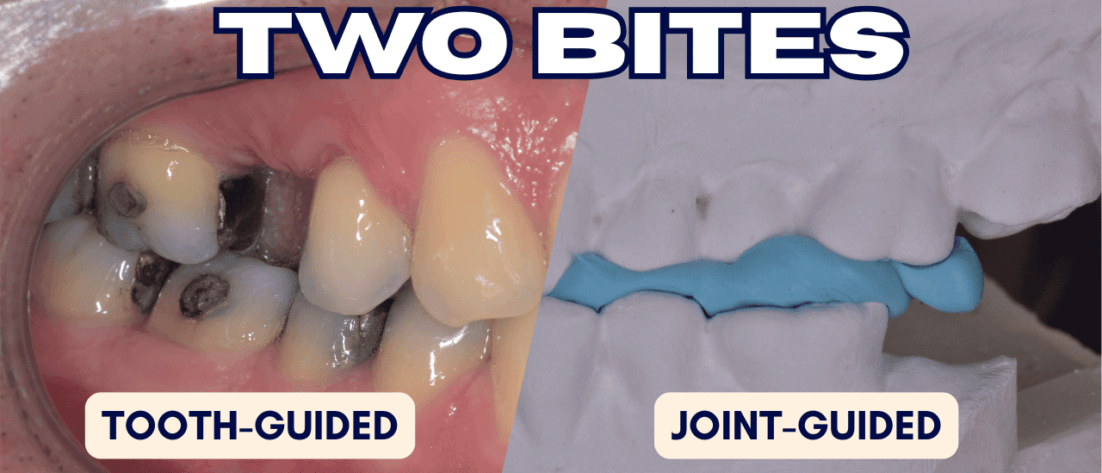
Do your patients really have two bites?
Does their bite change when they lie down? When they sleep?
And how can you explain centric relation, posture, and deprogramming in a way that patients actually understand?
Dr. Bobby Supple joins Jaz for a powerful episode unpacking one of the most misunderstood topics in occlusion: the daytime chewing bite versus the nighttime airway bite. After spending days with Bobby in his New Mexico clinic, Jaz saw firsthand how simply and elegantly Bobby communicates concepts that usually leave patients — and dentists — confused.
Together, they explore why bite discrepancies exist, what happens when the condyles fully seat, and how aligning Bite One and Bite Two over time can transform patient comfort and restorative outcomes.
Protrusive Dental Pearl
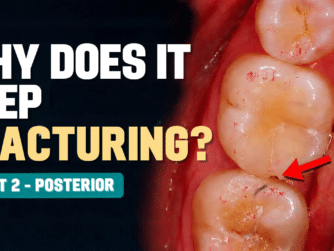
- When assessing abfractions, always check the patient’s bite in two positions: seated upright and lying back.
- Posture subtly shifts the condylar position and can change how forces load the tooth.
Want more gems like this? AskJaz — your on-demand dental brain, will be soon baked right into the Protrusive App.
Key Takeaways:
- Every patient has two bites — their upright chewing bite and their horizontal airway bite.
- Posture changes the condylar position more than we realise.
- Clear communication can make complex occlusion concepts instantly understandable.
- Aligning Bite One and Bite Two over time leads to healthier joints and more predictable dentistry.
Highlights of this episode:
- 03:36 Pearl – Assessing Abfractions
- 06:47 Dr. Bobby Supple’s Journey to Dentistry
- 10:46 Confusion Around Centric Relation
- 13:22 Exploring T-Scan Technology
- 21:40 The Evolution of Digital Occlusion
- 27:05 Effect of Sitting vs. Reclined Position
- 32:03 Airway and Skeletal Asymmetry
- 37:19 Bite Philosophy and Treatment
- 42:10 Orthotics and Long-term Care
- 52:13 Preventive Dental Care
- 58:18 Ask Jaz AI (Beta Launch)
🎓 Join the world’s leading organization dedicated to occlusion, temporomandibular disorders (TMD), and restorative excellence — the American Equilibration Society (AES).
🗓️ AES Annual Meeting 2026 – “The Evolution of the Oral Physician”
📍 February 18–19, 2026 · Chicago, Illinois
Papers & Literature: Dr. Bobby’s Top Picks
Introduction to force scanning
Digital Occlusion–From paper marks to digital force mapping
Discover Dr. Robert Kerstein’s guide to Measured Digital Occlusion and T-Scan technology.
Dive deeper into occlusion with Dr. Bobby Supple on Occlusion Wars II: Beyond Teeth – PDP101
#PDPMainEpisodes #OcclusionTMDandSplints #BestofProtrusive
This episode is eligible for 1 CE credit via the quiz on Protrusive Guidance.
This episode meets GDC Outcomes C
AGD Subject Code: 180 OCCLUSION
Aim: To enhance clinicians’ understanding of the “two bites” concept, the role of condylar position in occlusal health, the use of T-Scan in diagnosing occlusal force patterns, and the long-term prevention-based approach to managing occlusal stress, abfractions, and TMJ remodeling.
Dentists will be able to –
- Explain the concept of patients having “two bites” (MIP bite vs. airway/postural bite) and describe how posture influences mandibular position.
- Identify occlusal stress patterns using clinical examination and digital tools (e.g., T-Scan) to recognise overloads that may contribute to abfractions, cracks, or TMJ symptoms.
- Apply a long-term, preventive approach to occlusal management that aims to harmonise daytime and nighttime bites while supporting joint remodeling through appropriate orthotic therapy.
Continuing Education Information
This activity may be eligible for continuing education credit through Protrusive Guidance. Participants must complete the associated quiz inside Protrusive Guidance to obtain a CPD/CE certificate.
Cost:
Access to this CE activity is included with an active Protrusive Guidance membership. Current membership pricing is available at www.protrusive.app.
Cancellation & Refund Policy:
Memberships may be cancelled at any time. Access to CE activities remains active until the end of the current billing cycle. Subscription charges are non-refundable once processed. Full details are available at www.protrusive.app.
Delivery: Self-instruction (online) · Location: Online
Contact: manager@protrusive.co.uk